
If you're feeling unwell

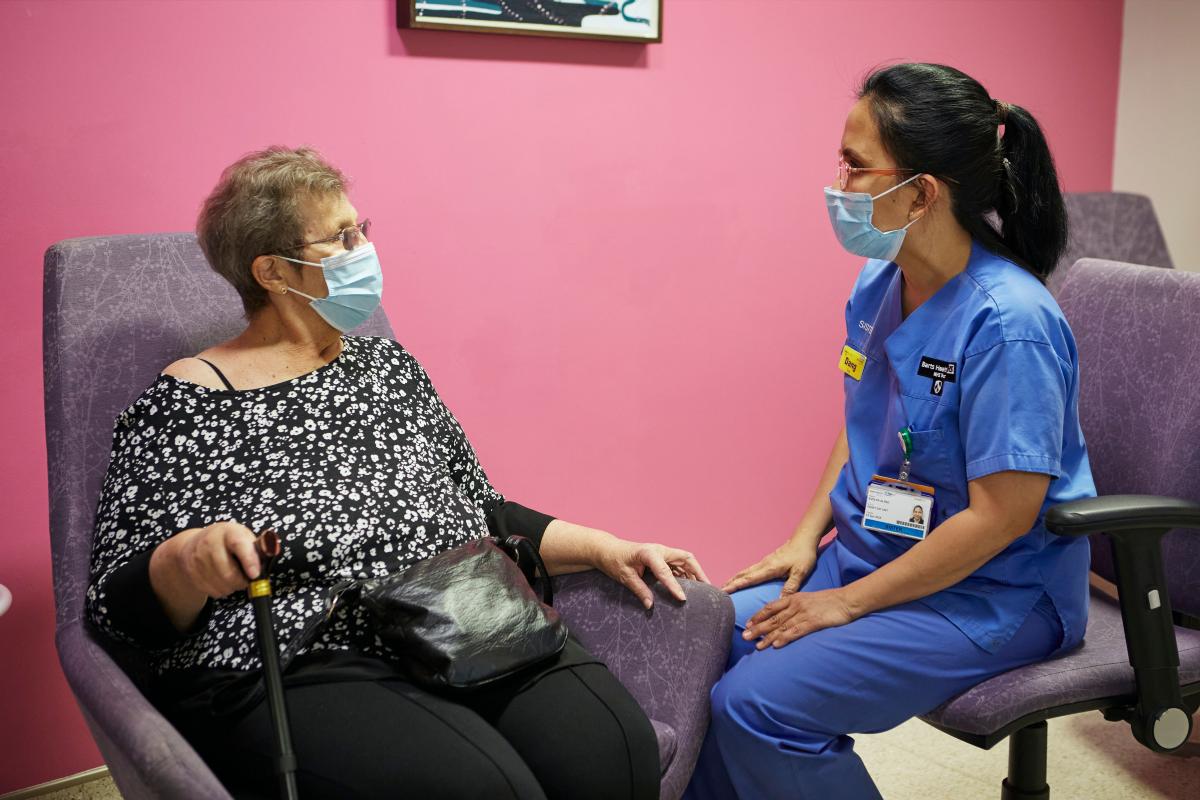
Your clinical nurse specialist
Here to guide, support and care for you every step of the way
Your clinical nurse specialist (CNS) is your key point of contact during your cancer care. They’re expert nurses who help explain your diagnosis and treatment, coordinate your care, and make sure you and your family feel supported throughout.
Your CNS can:
- Help you understand your condition and what to expect
- Offer a holistic needs assessment to explore any emotional, practical or physical needs
- Refer you to other services, such as welfare advice or psychology
- Support you in clinic or on the ward
- Speak to you by phone if you’re worried or feeling unwell
- Sometimes see you in place of a doctor
You may also meet a Macmillan support worker, who works with the CNS team to support your care.
Your CNS is available Monday to Friday, 9am–5pm. Outside of these hours, please call the chemotherapy hotline.

Our chemotherapy hotline
Is always available for you
Phone our 24-hour helpline on 07917 093738 if you have had cancer treatment and are feeling unwell.
You can call if you’re currently having, or have recently had, cancer treatments such as:
- Chemotherapy
- Immunotherapy
- Targeted therapy
- Radiotherapy
- Stem cell or bone marrow transplant
You should also call if you have cancer that has spread to the bones and you’ve been told by your specialist nurse to watch for:
- Back pain
- Numbness or loss of sensation
- Muscle weakness in your arms or legs
Call 999 or go to your nearest A&E straight away if you have:
- Chest pain
- Severe breathing difficulties
- Sudden confusion or loss of consciousness
- Heavy bleeding
- Symptoms of a stroke
- Any other life-threatening emergency

Cancer acute assessment unit (CAAU)
A safe, same-day service for cancer patients who feel unwell
The cancer acute assessment unit (CAAU) is a specialist day unit at St Bartholomew’s Hospital for people with cancer who need medical review, but don’t need to go to A&E.
You’ll be seen by a member of the cancer team, such as a doctor or nurse, in a calm and supportive environment.
Please note that the CAAU is not a walk-in service. You must be referred by your chemotherapy hotline team or your clinical nurse specialist (CNS).
If you're feeling unwell, call the chemotherapy hotline or your CNS first. They’ll assess your symptoms and decide whether CAAU is the right place for you.
Acute oncology service
Expert support during emergency hospital stays
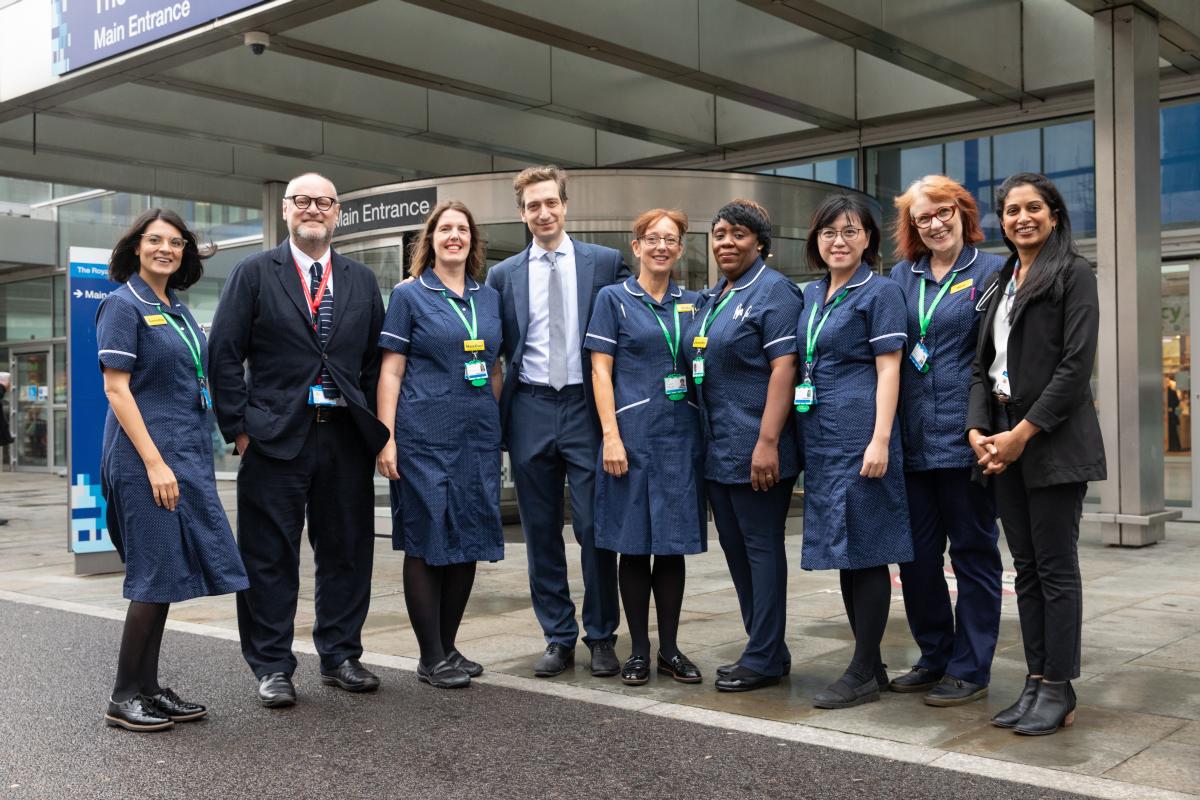
If you’re admitted to hospital unexpectedly while living with cancer, our acute oncology service is here to help.
This nurse-led team works across Newham, The Royal London and Whipps Cross hospitals. They support doctors and nurses caring for you if you’re in hospital due to cancer or side effects from treatment.
We can:
- Recommend tests and treatments
- Help manage pain or symptoms
- Arrange specialist support
- Update your cancer team
The service also includes visiting cancer doctors who support your care.
If you’re at home and feeling unwell while on treatment, please call the chemotherapy hotline on 020 3465 7999 or go to A&E.

Specialist care that offers comfort, dignity and support
To manage your pain and symptoms
Our palliative care teams help improve quality of life for people with serious illness, including cancer. We focus on managing pain, easing symptoms and supporting you emotionally and practically at every stage of your care.
Specialist doctors and nurses work across all our hospitals and in the community to offer personalised support, shaped around your needs.
We also have:
- The Margaret Centre – a dedicated palliative care unit at Whipps Cross Hospital for local residents
- Macmillan support teams at Newham, The Royal London and St Bartholomew’s hospitals
If you or someone you care for needs palliative care, please speak to your nurse or doctor.
Contact us
- Newham: 020 7363 8105
- The Royal London: 020 7480 4768
- St Bartholomew’s: 020 3765 8589
- Whipps Cross: 020 8535 6605 or 020 8539 5522 (x5399)

Support each other
Share your experience through patient support groups
We run a number of support groups for people affected by cancer. These offer you a chance to meet others going through similar treatment, share experiences, and learn more about your condition.
Many of our clinical nurse specialists (CNS) lead support groups for their patients. Speak to your CNS to find out which groups might be right for you.